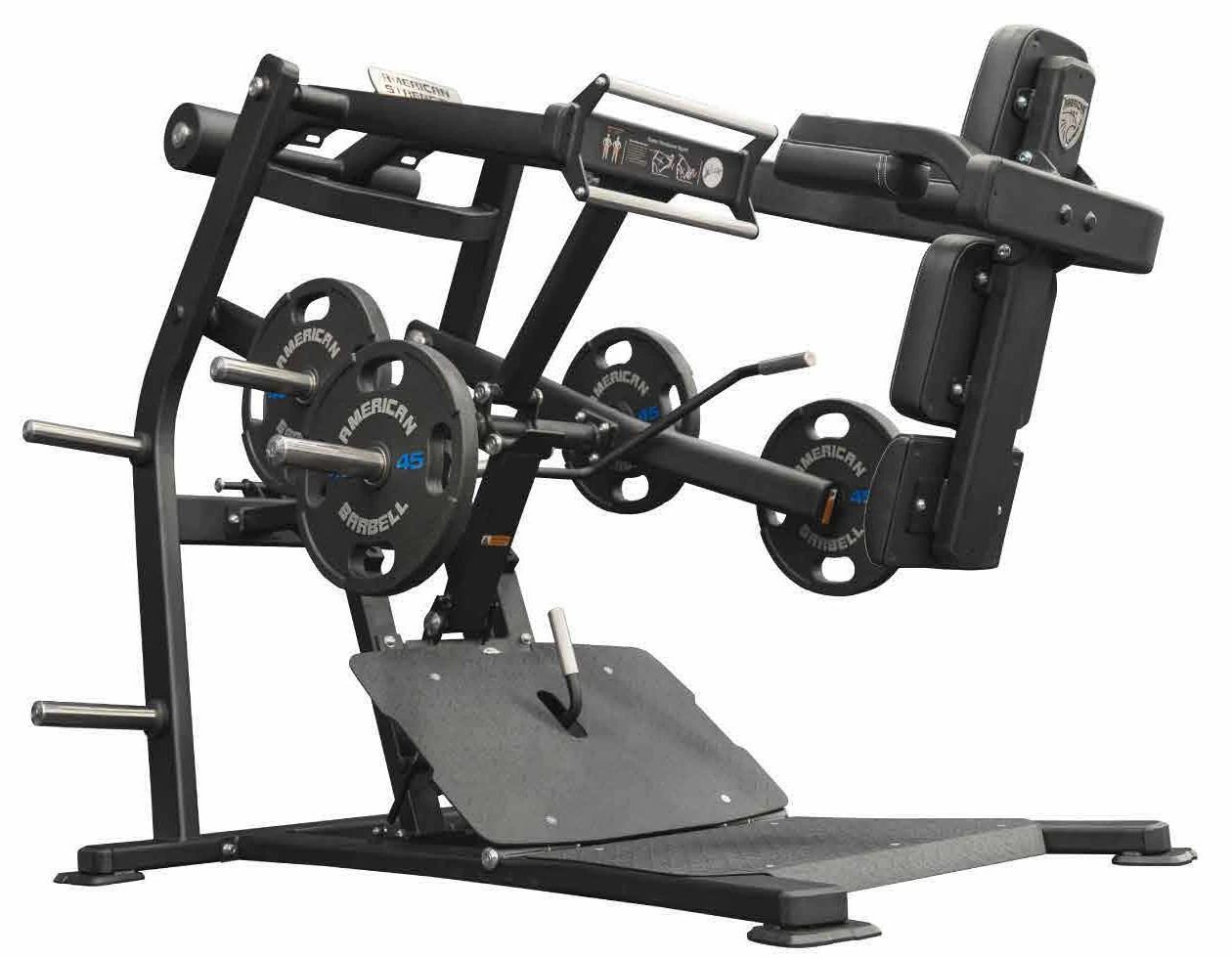
Squat station · Qty 1
Pendulum Squat
A guided squat with a 100 lb counterbalance. Position the plate horns where members can load from either side.

Compare a five-piece lower-body equipment package for commercial gyms, bodybuilding facilities, and athletic weight rooms.

This example pairs one squat station with three stations for hip extension and hamstring work, plus one storage unit. Each product page includes photos and specifications. Quantities can change with the room and the program.
Squat station · Qty 1
A guided squat with a 100 lb counterbalance. Position the plate horns where members can load from either side.
Hip extension · Qty 1
A raised foot platform and padded back support give hip thrusts a dedicated station. Allow room to enter and reach each loading sleeve.

Hamstring isolation · Qty 1
Adds knee flexion alongside the squat and hip thrust. Keep the approach to the support pads clear.

Single-leg glute work · Qty 1
An adjustable knee pad supports the user for kickbacks. Keep the moving arm clear of the path between machines.

Plate storage · Qty 1
Keeps plates close to the loading stations. Place it where users can return a plate without blocking someone entering a machine.
Start with the busiest station and mark where the user enters, where the lever travels, and where plates are loaded. Draw the access aisle after marking those areas.
For example, the Pendulum Squat frame measures 54.5 inches long by 35.2 inches wide. Its operating area also needs space for the user, plates on the horns, and people passing the station. Validate the final layout against manufacturer requirements and the building plan.
A squat station and a dedicated hip-extension station cover two different training needs. In this example those are the Pendulum Squat and Hip Thrust V2. Add knee flexion and single-leg work when member demand and space justify them.
The room dimensions, columns, entry points and plate-loading sides all affect fit. Send a measured plan so the team can review each machine’s footprint and operating area before quoting quantities.
Specify the plate sizes and quantities you need, along with any plates already on site. The example includes a plate tree. The written quote should list weight plates and accessories separately.
Use the facility inquiry form and mention the Leg & Glute Training Zone. Include approximate dimensions, current equipment, busiest hours, delivery ZIP code and target date. Mention any substitutions you want priced.
Tell us which stations you want to keep, add or replace. We can use the five-piece list as the starting point for your room.